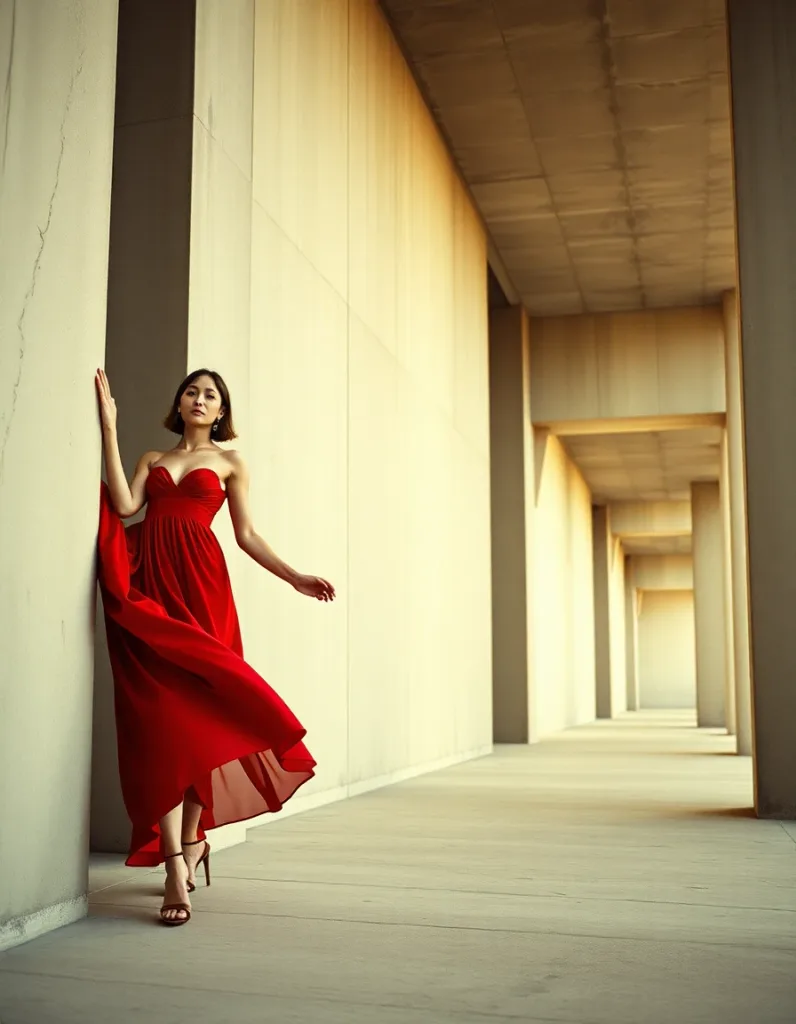
Modest fashion is one of the largest, fastest-professionalizing segments in global apparel — abayas and hijabs across the Gulf, dupatta-led ensembles across South Asia, and coverage-conscious lines from brands everywhere in between. Yet point a generic AI image tool at it and the results say everything about whose wardrobe those tools were trained on: hijabs rendered as vague head-cloth, abayas collapsed into evening gowns, dupattas deleted entirely, and poses that ignore how covered garments are actually presented.
For a modest fashion brand, those aren't quality issues — they're category errors that make the imagery unpublishable. This guide covers what modest fashion photography actually requires, where generic AI fails it, and what a first-class AI workflow for the category looks like.
What the category actually requires
Modest fashion photography is its own craft with its own conventions, and any tool serving it has to understand at least four:
Garment vocabulary. An abaya is not a maxi dress: it has its own cut, volume, and fall. A shayla drapes differently from an al-amira; a chiffon dupatta behaves nothing like a heavy lawn one. Tools without this vocabulary generate approximations — and a customer who wears these garments daily clocks an approximation instantly.
Coverage integrity across poses. Styling that's modest standing still can fail in motion — a slit opening mid-stride, a sleeve riding up, a neckline shifting. Real modest-fashion shoots direct poses that keep coverage intact through movement. AI generation must do the same: posing presets that respect the styling, rather than defaulting to the crossed-arm, hand-on-hip repertoire of Western lookbooks.
The drape as product. In dupatta-led and hijab-led looks, the drape is a styling decision the customer is buying into — over one shoulder or both, pinned or freely falling, framing the face this way or that. A tool that treats the dupatta as an accessory to be simplified away deletes the product's most expressive element.
Styling coherence. Modest looks are ensembles. The hijab fabric relating to the abaya, the dupatta belonging to the suit — coherence customers notice, and generic generation frequently breaks.
Why generic tools get this wrong
Nothing conspiratorial: training data and product priorities. General-purpose models see orders of magnitude more Western editorial than Gulf abaya photography, so "elegant woman in black dress" pulls toward the statistically dominant image — and every modest-fashion-specific request fights that gravity. Prompt engineering can partially compensate, but a brand shouldn't have to argue with its photography tool about what an al-amira is on every generation.
The structural fix is a platform that ships the category as presets, not prompts: named hijab styles, dupatta draping options, abaya-compatible posing, and coverage settings as first-class controls. That's the approach LensGo's Fashion Studio takes — modest styling as a built-in styling system alongside scenes and poses, not a phrase you append and hope.

The workflow, category-adjusted
The mechanics follow the standard flat-lay to on-model conversion, with modest-specific decisions at each step:
1. Photograph the full ensemble. For a three-piece suit, capture all components — and shoot the dupatta both folded (to show the print) and loosely arranged (to show the fall). For abayas, a ghost-mannequin or hanger shot preserves the volume a flat-lay can flatten.
2. Cast for your customer. Saved Brand Models (via the AI Fashion Model Generator) matter doubly here: a consistent, recognizably styled model builds exactly the trust modest fashion customers reward — and the same-face consistency holds across your hijab-styled and dupatta-styled lines alike.
3. Style with presets. Select the hijab style, the draping option, the coverage level, and posing from the modest set — so a walking pose keeps the abaya closed and a seated pose keeps the dupatta composed. This is the step where preset-based tooling pays off: styling is specified once and applied consistently across the whole drop.
4. Review with a category eye. Beyond the standard fidelity checks — print, construction, drape — verify coverage is consistent with your styling standard in every frame, the drape reads as deliberate styling, and the ensemble stayed coherent. Reject anything borderline. The original generation remains charged; the first re-roll is free, later re-rolls consume credits, and provider or system failures refund automatically.
5. Extend to the color run. Modest lines ship deep color runs — an abaya in six colors is a catalog staple. Generate variants from your accepted frame with the colorway workflow, keeping the styling identical across every dyeway.
Scenes that fit the market
Staging matters as much as styling. Gulf and South Asian customers see their aesthetics reflected in majlis-style interiors, desert-light exteriors, Eid and wedding settings — not just the Brooklyn loft of default AI generation. Scene presets that include these contexts let a small label produce campaign imagery that looks culturally native rather than translated. For South Asia-specific catalog economics — lawn, unstitched, festive drops — see AI product photography for Pakistani fashion brands.
Worth naming the regional nuance, too: "modest fashion" is not one aesthetic. Gulf abaya styling runs minimal and architectural — clean lines, monochrome, the drama in the fabric's fall. South Asian dupatta styling runs expressive — print, color, the drape as ornament. A Malaysian or Turkish hijab-fashion label sits somewhere else again, often layering Western silhouettes under coverage-complete styling. A brand should be able to specify its market's vocabulary rather than receiving a generic "modest" average of all three — which is exactly why presets beat prompts: named styles can be chosen; averages just happen.
Write the style guide before the shoot
The brands that get consistent results treat modest styling as a documented standard, not a per-image judgment call. Ten lines is enough:
- Which hijab styles (or draping styles) the brand uses — by name.
- The coverage standard: sleeve length, neckline, hem behavior in motion.
- What is never shown, so a reviewer can reject in one glance.
- The scene palette: which settings belong to the brand, which don't.
- Who reviews, and what an automatic rejection looks like.
This is the same style-bible discipline any brand applies to logo usage, applied to styling — and it turns the review pass from a debate into a checklist. It also makes the presets composable: the guide chooses the preset once, and the whole drop inherits it.
Respect is a product requirement
One principle governs everything above: modest fashion imagery is about serving customers whose standards are non-negotiable, and those standards belong to the customer, not the tool. In practice:
- The brand defines its coverage standard; the tool's job is to hold it in every frame.
- Review every image against that standard before publishing — automation generates, editors approve.
- Depict garments accurately: drape, opacity, and cut as they truly are. A gauzy render of an opaque abaya isn't a style choice, it's a misrepresentation.
- Disclose AI-generated imagery. Trust is the currency of this category more than most.
Modest fashion has been an afterthought in enough tools. Built for properly — with the vocabulary, the presets, and the review discipline — AI photography gives modest brands what it gives everyone else: studio-grade catalogs at browser prices, without compromising a single standard.
See how the presets handle your own pieces: create a LensGo account and run the free sample shoot — one garment, three on-model images, signup required — on the ensemble whose drape matters most.