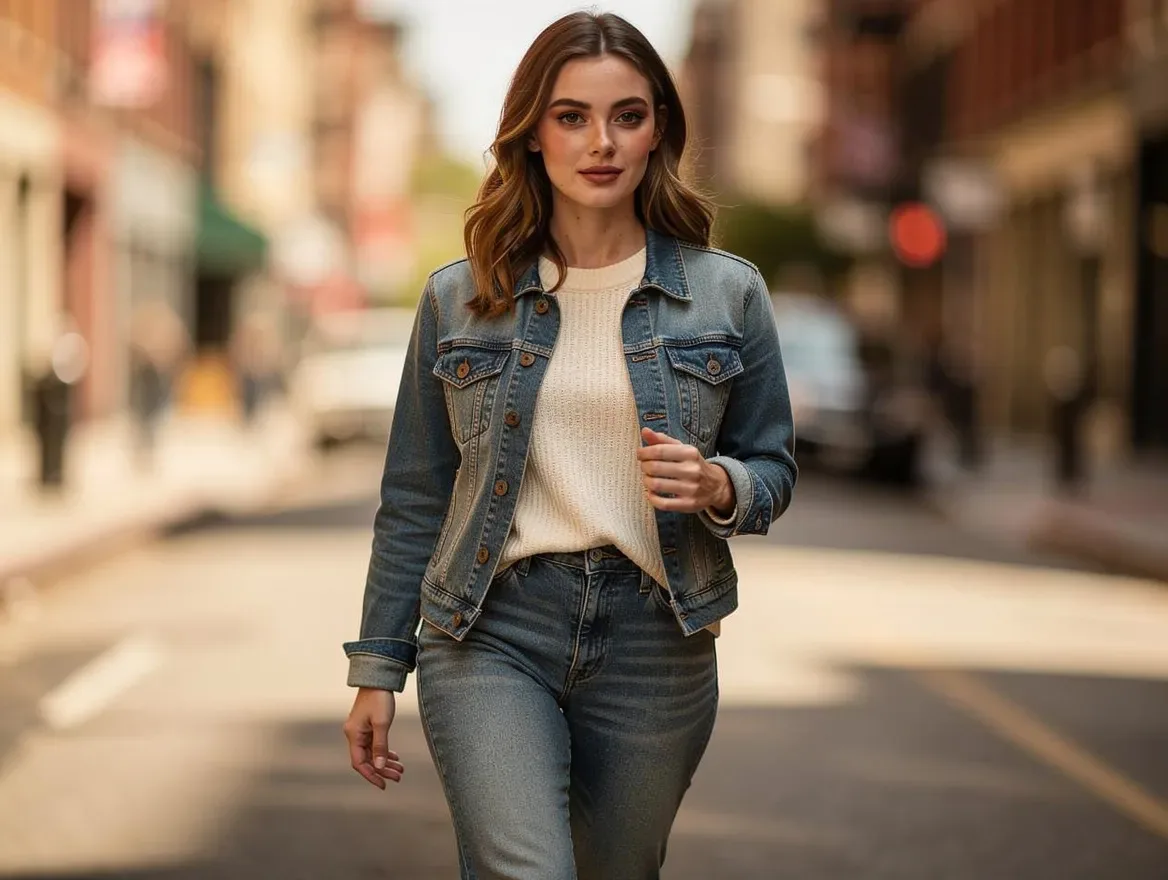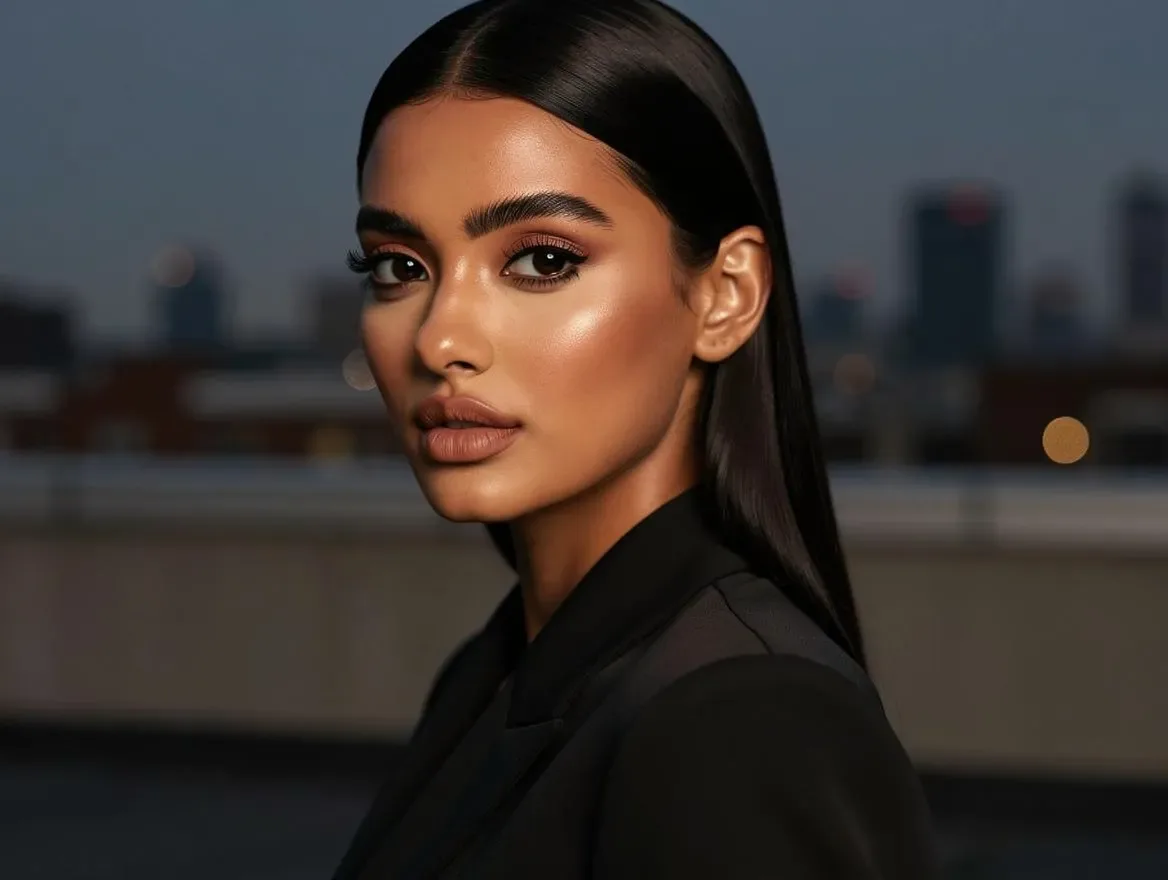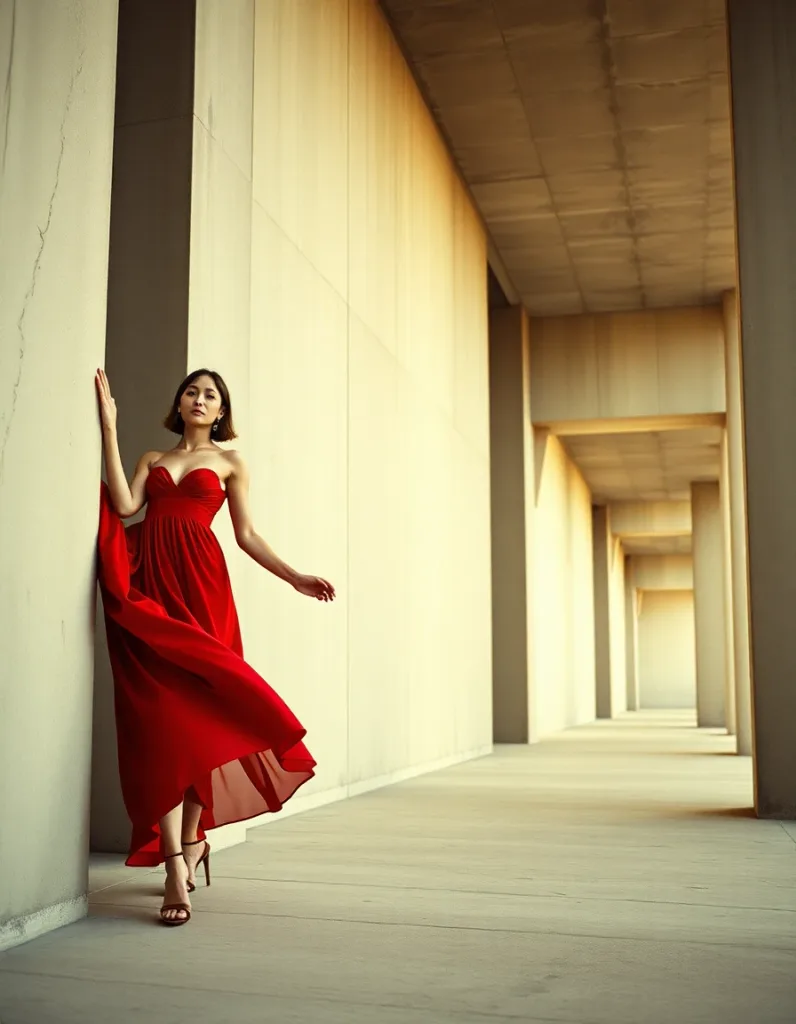
Fashion photography has a cost structure problem. A clothing brand doesn't shoot once — it shoots every collection, every season, forever. Studio, photographer, models, styling, steaming, retouch: the whole production apparatus reassembles a few times a year, and the bill arrives whether the collection sells or not.
AI fashion photography changes the input. Instead of building a set around the garment, you photograph the garment itself — a flat-lay on a bedsheet is genuinely enough — and generate the on-model imagery from that reference. This guide covers how the workflow actually operates, the three capabilities that separate usable tools from toys, and an honest account of where AI fits in a fashion brand's content stack and where it doesn't.
The core workflow: flat-lay in, catalog out
Every AI fashion pipeline reduces to the same four steps:
- Capture the garment. A flat-lay, ghost-mannequin, or hanger shot. This reference is the single most important input — the AI can only preserve what your photo shows.
- Cast and stage. Choose the model who will wear the piece, the pose, and the scene: clean studio for product pages, lifestyle settings for social and campaigns.
- Generate and review. The AI produces on-model images of your garment. You review each one and keep only what's faithful to the piece.
- Export. The accepted set goes to your product pages, social calendar, and ads.
The step brands underestimate is the first one. Even lighting, a plain background, and the garment laid flat without heavy creasing raise output quality more than anything you do downstream. There's a full walkthrough in flat-lay to on-model: how to turn garment photos into model shots, but the short version is: photograph the garment the way you'd want a pattern-cutter to see it.
Capability one: fabric fidelity
Here is where most tools fail, and where every clothing brand should start their evaluation: does the garment in the output match the garment you sell?
Generic image generators treat clothing as decoration. Ask a general-purpose model for "a woman in an embroidered kurta" and you get an embroidered kurta — an invented one. Feed a real garment photo into a tool that wasn't built for apparel and the failure is subtler and worse: embroidery smears into texture noise, prints warp where the fabric drapes, necklines redesign themselves, and the piece in the photo quietly stops being the piece in your inventory.
For Western basics — a plain tee, a hoodie — this matters less. For the detail-heavy end of fashion it's everything. Chikankari's shadow-work stitching, a lawn print's repeat, zari borders, block-print motifs: these details are the product. A test with your most detailed piece, zoomed to 100%, tells you more about a tool than any feature list.
A purpose-built platform handles this differently: the garment photo is a hard reference the generation is conditioned on, not a suggestion. LensGo's Fashion Studio is built around exactly this promise, with a review board where you can reject or re-roll an image that misses the details. Provider and system failures refund automatically; subjective rejects keep their original charge.
Capability two: model consistency
Run a text prompt twice and you get two different people. That's tolerable for one-off content; it's disqualifying for a catalog. A product grid where every SKU is worn by a different stranger doesn't read as a brand — it reads as a stock-photo collage.
The fix is the same one the AI-character world discovered: stop describing the model and start referencing them. A saved model identity — LensGo calls them Brand Models, built with the AI Fashion Model Generator — anchors every generation to the same face. You cast the same two to five models across the entire catalog, the way a real brand books the same faces for a campaign. Season to season, the customer recognizes the person wearing the clothes.
Consistency compounds in ways that are easy to underestimate: your Eid campaign, your product pages, and your Instagram grid all feature the same faces, which is exactly what makes a small label look like an established one.
Capability three: scale mechanics
A tool that produces one beautiful image is a demo. A collection is 40 pieces, each needing a front view, a detail crop, and a couple of lifestyle frames — and there are colorways multiplying everything. Evaluate:
- Batch processing. Can you queue the whole drop, or are you feeding garments in one at a time?
- Review workflow. Is there an accept/reject board, or are you renaming files in a downloads folder?
- Colorways. Can one reference produce the full color run with the print intact? (This deserves its own workflow — see how to create colorways of clothing photos with AI.)
- Payment honesty. Check which technical failures refund automatically, whether rejects keep their original charge, and what each re-roll costs.
Where AI fits — and where it doesn't
An honest map, because the tools are not magic:
AI is strong for on-model PDP imagery from flat-lays, colorway variants, social and campaign volume, and testing creative directions before committing budget. It's strongest exactly where traditional production is weakest: iteration and volume.
AI is not the tool for fit documentation (how the size 12 actually sits on a size-12 body), fabric hand-feel storytelling (drape in motion on video), press and runway coverage, or any context where the buyer expects documentary truth. Serious brands also disclose AI-generated imagery — audiences accept it; they don't accept discovering it.
The pattern that works isn't replacement, it's reallocation: AI carries the catalog volume, and the photography budget concentrates into one great seasonal campaign shoot instead of being spread thin across three hundred SKUs.
The economics, briefly
Traditional shoot economics are step-functions: every shoot day costs the same whether you photograph twelve garments or twenty-two. AI economics are per-image, which is why the comparison gets dramatic at catalog scale — hundreds of finished images priced in cents rather than shoot days priced in the hundreds of thousands of rupees or thousands of dollars. The clothing brands solutions page has an interactive calculator that lets you run your own numbers; regional context for Pakistan's market is in AI product photography for Pakistani fashion brands.
How to actually evaluate a tool
Skip the marketing pages and run this test:
- Pick your most detailed garment — embroidery, fine print, texture.
- Photograph it flat, in daylight, on a plain background.
- Generate on-model images and zoom every result to 100% on the detail work.
- Generate the same garment again with the same model selected — check whether the face held.
- Only then look at batch, colorways, and pricing.
Most tools fail at step 3 or 4. The ones that pass are the ones built for fashion rather than adapted to it — and modest styling support is a further filter worth applying if your market needs it (modest fashion photography with AI covers that in depth).
Ready to run the test on your own pieces? Create a LensGo account and start with the free sample shoot — one garment, three on-model images, signup required — and judge the fidelity on your most difficult garment, not a demo.