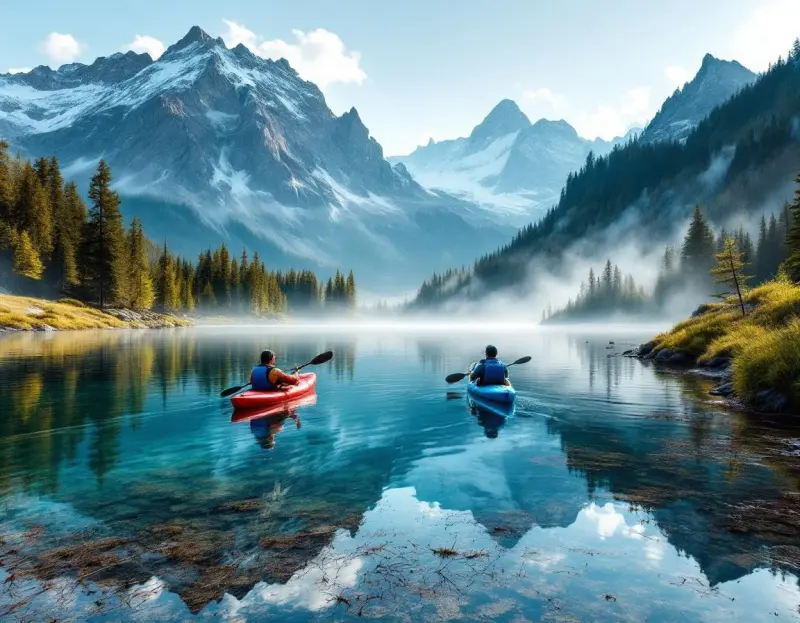
Creating beautiful AI-generated travel content is creatively fulfilling, but it can also be financially rewarding. The travel content economy is enormous — brands spend billions annually on influencer marketing, affiliate programs, and content partnerships — and AI generation gives individual creators the production capability that previously required entire studios. Here's how to turn that capability into revenue.
1. Brand Partnerships and Sponsored Content
Brand partnerships remain the most lucrative revenue stream for travel content creators, and AI-generated imagery is increasingly accepted by brands — particularly those in the travel, hospitality, and lifestyle sectors. The key is demonstrating that your audience is engaged and that your visual content drives measurable outcomes (clicks, bookings, brand awareness).
The creators who command the highest rates aren't necessarily those with the largest followings. They're the ones with a clearly defined niche, a recognizable visual brand, and an audience that trusts their recommendations. A creator with 15,000 highly engaged followers who consistently generate saves, shares, and click-throughs is more valuable to a boutique hotel than a creator with 500,000 followers and minimal engagement.
When pitching brand partnerships, lead with your content quality and engagement metrics, not your follower count. Create a media kit that showcases your best work, your audience demographics, and your engagement rates. Include specific examples of how your content has driven results for previous partners. And be transparent about your use of AI generation — most brands care about the quality and effectiveness of the content, not whether it was shot with a camera or generated with a prompt.
Just as important: be transparent with your audience. Wherever you earn from a recommendation, disclose it — use #ad or your platform's "paid partnership" tools for sponsored content and clearly label affiliate links. Regulators (the FTC in the US, consumer protection authorities in the EU) require this disclosure, and undisclosed paid promotion can put both you and the sponsoring brand at legal risk.
2. Affiliate Marketing
Affiliate marketing pairs naturally with travel content because your audience is actively planning trips. When you recommend a destination, your viewers want to know where to stay, how to get there, and what to do — and affiliate links let you earn a commission when they act on your recommendations.
The major travel affiliate programs include Booking.com, Expedia, GetYourGuide (tours and activities), and various airline affiliate networks. Commission rates vary but typically range from 4–8% of the booking value — third-party program terms change, so confirm current rates and conditions directly with each program. Given that hotel bookings can easily run into thousands of dollars, even modest traffic volumes can generate meaningful income. Remember to label affiliate links clearly wherever they appear — disclosure is a legal requirement, not a courtesy.
The key to effective affiliate marketing is integration. Don't paste affiliate links as afterthoughts — build your content around genuine recommendations and weave the links naturally into the value you're providing. A blog post about "The 10 Best Boutique Hotels in Lisbon" with beautiful AI-generated imagery of each property, paired with genuine reviews and affiliate booking links, provides real value to readers while generating revenue.
3. Digital Products
Your expertise in creating AI travel content is itself a valuable product. Consider packaging your knowledge into digital products that your audience can purchase and use.
Prompt libraries are collections of your best-performing AI prompts, organized by destination, style, or platform. Creators who have spent months refining their prompt architecture have accumulated intellectual property that other creators will pay for. A well-organized prompt library priced at $15–30 can generate substantial passive income at volume.
Preset packs and visual guides teach your specific workflow — how you prompt, how you edit, how you compose for different platforms. These work particularly well as PDF guides or video courses and can be priced higher ($30–100) because they provide more comprehensive value.
Content templates — downloadable social media templates with your brand's design system, ready for other creators to customize with their own generated images — offer another revenue stream that leverages your design expertise.
4. Print-on-Demand and Physical Products
AI-generated travel images can be strikingly beautiful as physical art. Print-on-demand services like Society6, Redbubble, and Fine Art America let you upload your images and sell them as prints, canvas wraps, phone cases, and other products without holding any inventory. Before uploading, check each platform's current AI-content policy — some print-on-demand and stock platforms restrict or have specific rules for AI-generated work, and those rules change over time.
The travel art market is substantial — people decorate their homes and offices with images of places they love or aspire to visit. A cohesive collection of AI-generated travel images, organized by destination or aesthetic theme, can become a passive revenue source that grows alongside your audience.
For best results, generate images at the highest available resolution and focus on compositions that work as wall art — strong visual impact, balanced compositions, and emotional resonance. The images that perform best commercially tend to be different from the ones that perform best on social media. Social content needs to stop the scroll; wall art needs to reward sustained attention.
5. Stock Photography Libraries
Several stock photography platforms now accept AI-generated images, and the travel category is consistently one of the highest-demand segments. Contributing to stock libraries generates passive royalty income that accumulates over time as your library grows.
The key to stock photography income is volume and keyword optimization. Each image needs comprehensive, accurate tags that match what buyers search for. Think like a buyer: a marketing manager looking for "Santorini sunset hotel marketing" needs images that are specifically optimized for commercial use — clean compositions, no identifiable trademarks, and a mood that supports rather than competes with marketing copy.
6. Content Licensing and Syndication
As your content library grows, you can license individual images or collections directly to businesses. Tourism boards, travel magazines, hotel chains, and travel agencies all need visual content, and many are open to licensing arrangements with creators who produce high-quality, consistent work.
Licensing can be structured as one-time fees (a hotel pays $200 to use a specific image in their marketing) or ongoing arrangements (a tourism board pays a monthly retainer for access to your content library). The latter is more valuable because it creates recurring revenue.
7. Service-Based Income
Your AI content creation skills can be packaged as a service for clients who need visual content but don't have the expertise or time to create it themselves. Small hotels, travel agencies, tour operators, and tourism marketing firms are all potential clients.
Service-based work might include creating social media content calendars with generated imagery, producing visual assets for marketing campaigns, building brand-consistent image libraries, or consulting on visual strategy. This work is less scalable than passive income streams but typically generates higher per-hour revenue, especially when starting out.
Building Sustainable Revenue
The most financially successful travel content creators diversify across multiple revenue streams rather than relying on any single source. A typical mix might include brand partnerships as the primary income driver, supplemented by affiliate revenue from blog content, passive income from digital products and print-on-demand, and occasional service work for select clients.
The foundational investment for all of these revenue streams is the same: building an audience that trusts your expertise, a visual brand that's instantly recognizable, and a content library that demonstrates your capability. AI generation dramatically reduces the time and cost of building that foundation, letting you reach the monetization stage faster than traditional photography would allow.