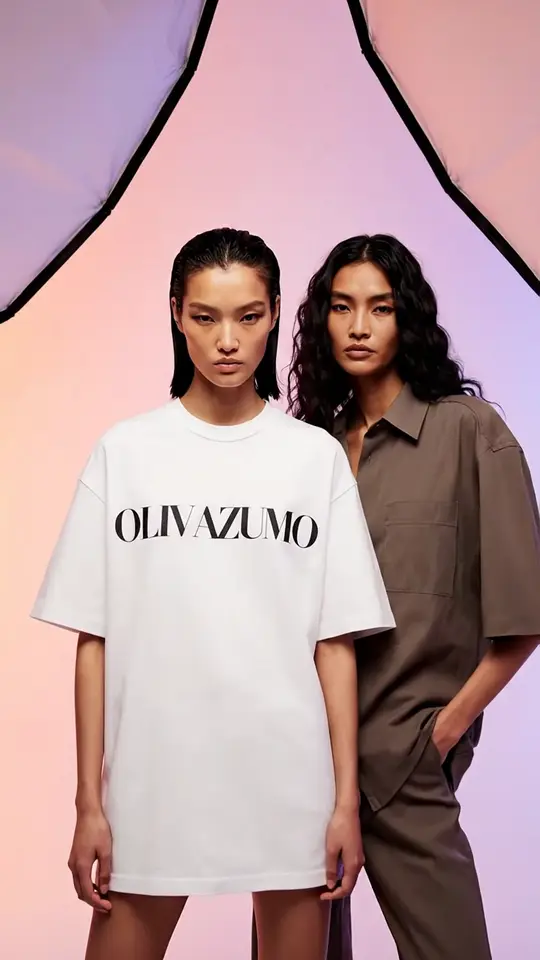
A virtual influencer is a fictional persona a brand or agency owns outright: a face, a personality, and a content stream that exist entirely as generated media. Not a filter over a real person — an invented one.
For brands, the appeal is control. The persona is always available, never ages out of a campaign, doesn't need to be re-booked between markets, and can't post something on a Saturday night that becomes Monday's crisis. The trade is that you now carry the responsibilities a human creator used to carry: authenticity, disclosure, and the rights behind everything the character touches.
Where virtual influencers actually fit
Not every campaign wants one. The use cases that hold up:
- A brand face with continuity. A persona who fronts your channels for years, across product cycles and markets, without renegotiating usage rights each season.
- Always-on social content. Weekly posts that need a consistent human presence but don't justify a shoot.
- Performance creative at volume. UGC-style ad variants where a recognizable creator improves credibility and results are read against a stable face.
- Category education. A persona who demonstrates, explains, and answers — a friendlier vehicle than a spec sheet.
- Markets and moments a shoot can't reach. Seasonal scenes, distant locations, or fast reactive content where booking a crew isn't realistic.
Where they don't fit: anything whose value is a real person's lived credibility. A dermatologist's recommendation, an athlete's endorsement, a customer's genuine testimonial. A virtual persona cannot supply real lived experience, and pretending otherwise is where brands get in trouble.

The rights conversation
Get this right before the persona is public. Three things to work through:
1. Likeness — build fictional, always. Your character must not be a real person. Don't model it on a celebrity, a public figure, an employee, or anyone else without explicit written consent. Beyond the platform rules, most jurisdictions protect a person's likeness and publicity rights, and "the AI made it" is not a defense. Fictional-by-design is the only clean position.
2. Content ownership and terms. Know what your generation platform's terms say about the assets you produce, what you may use commercially, and what you're responsible for. Read LensGo's Terms of Service for the specifics of your rights and obligations — and give the same read to any other tool in your stack. If a brand's legal team is going to ask, ask first.
3. Brand safety and the persona's world. Your character will appear alongside products, locations, logos, and lookalikes. The usual rules still apply: no third-party trademarks or copyrighted characters you don't have rights to, no implied partnerships that don't exist, no claims you can't substantiate. Generated media doesn't get an exemption from advertising law.
Disclosure: say it plainly
Disclose that your influencer is AI-generated. This is not a nice-to-have.
Advertising regulators — the US Federal Trade Commission among them — treat endorsements as material representations to consumers. An endorsement from someone who doesn't exist, presented as if they do, is the kind of thing that gets characterized as deceptive. The FTC's endorsement guidance also makes clear that a brand can't escape responsibility by putting the message in an intermediary's mouth. Rules differ by market, so check your local regime (and your platforms' own synthetic-media policies) — but the safe, universal posture is simple:
- State it in the persona's bio: this creator is AI-generated.
- Label posts and ads clearly — in the creative itself where practical, not buried in a hashtag pile.
- Keep the material connection obvious: the persona is owned by the brand, so every post is an ad, and should be treated as one.
- Never let the persona claim first-hand experience it can't have — it didn't try the product, and it doesn't have skin.
Audiences tend to be far more forgiving of a virtual creator they were told about than of one they discover for themselves.
How to start — a realistic first 30 days
Week 1 — Define. Write the persona brief: who they are, who they're for, what they'd never say. Name them. Decide the disclosure language now, not after launch.
Week 2 — Cast and lock. Generate the character and save it so the face is fixed across everything that follows. In LensGo that's a Lens ID — a saved character built from reference images, reused in every generation. It's reference-based consistency, not custom model training, so you'll have a working persona the same day rather than waiting on a training run.
Week 3 — Build the first content pack. A month of posts in one sitting: hero portraits, lifestyle scenes, product-in-hand shots, vertical crops, and a couple of short clips animated from the best frames. (Motion only — LensGo doesn't do lip-sync or synthetic speech, so plan B-roll plus captions.)
Week 4 — Launch small and watch. Publish, disclose, and read the response before you scale spend. Growth and performance results vary by category and execution, so treat the first month as a read, not a forecast.
Then keep the loop turning: the persona's value is continuity, and continuity is a weekly habit.
The bottom line
A virtual influencer is a brand asset you own, and it behaves like one: it compounds if you're consistent, and it becomes a liability if you're careless with likeness, claims, or disclosure. Build fictional, keep the face locked, label it clearly, and the rest is just content.
Create your brand's character in LensGo and put the same face in every scene.